Louis D. Brown Peace Institute
Description
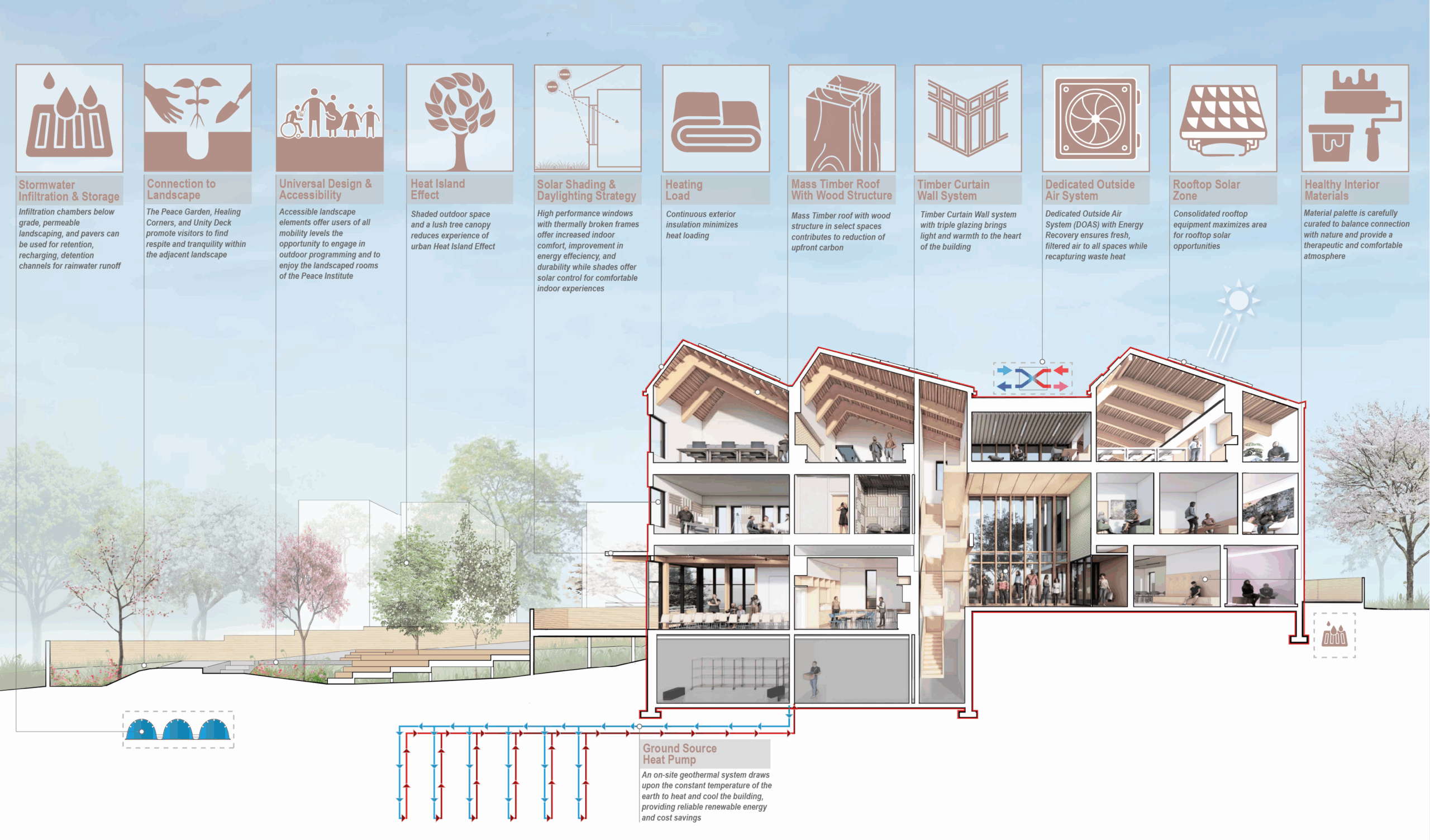
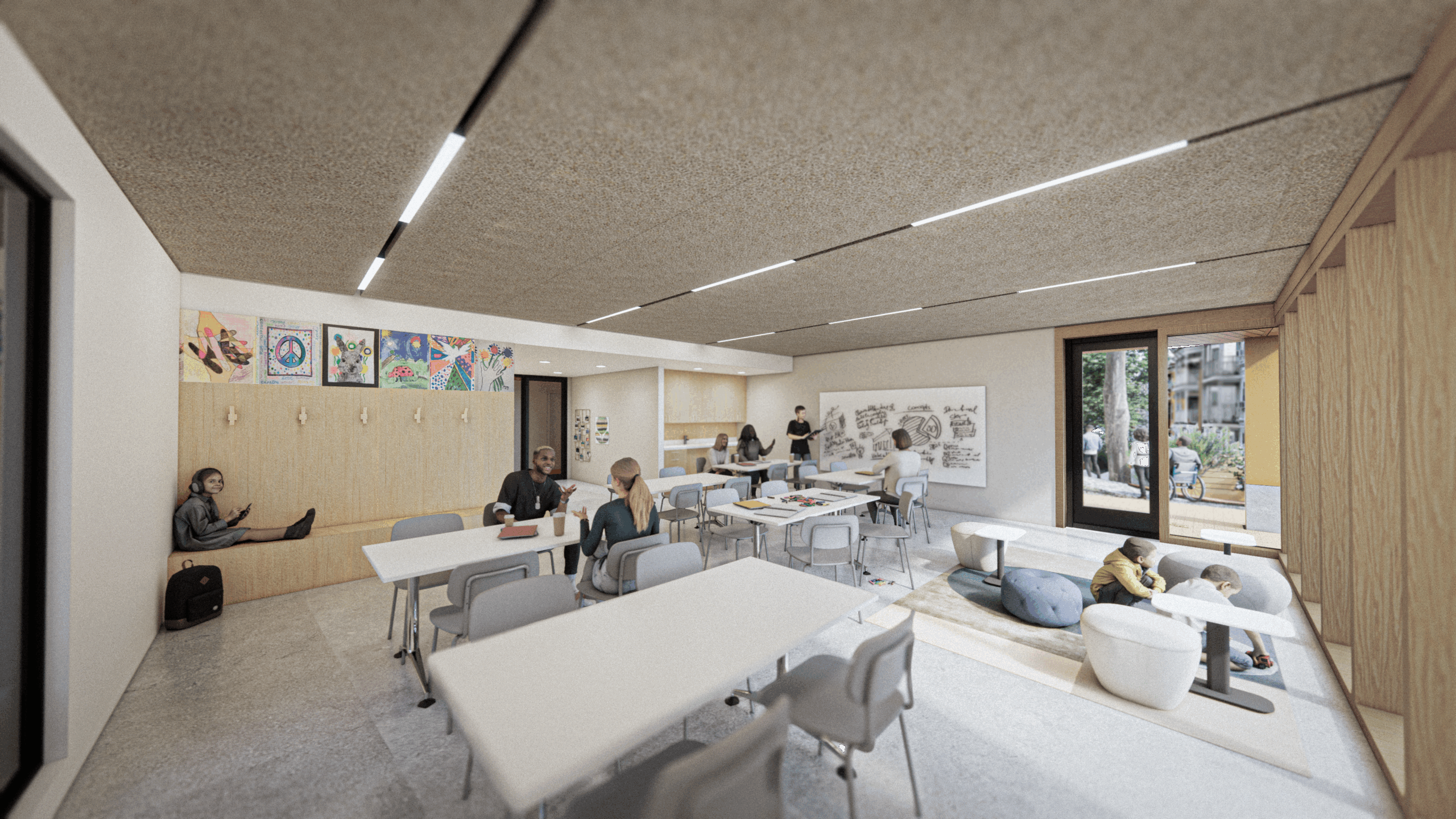
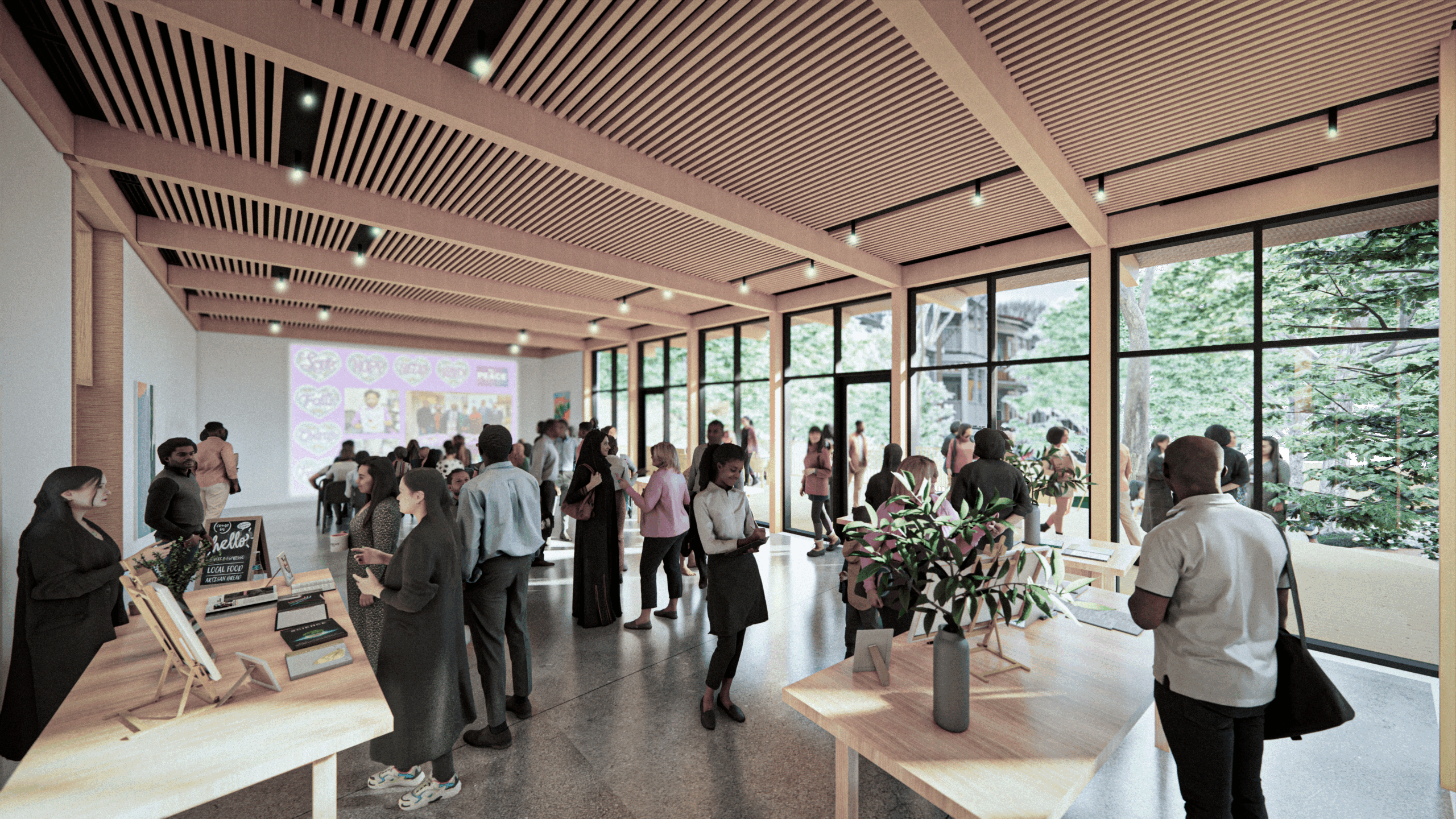
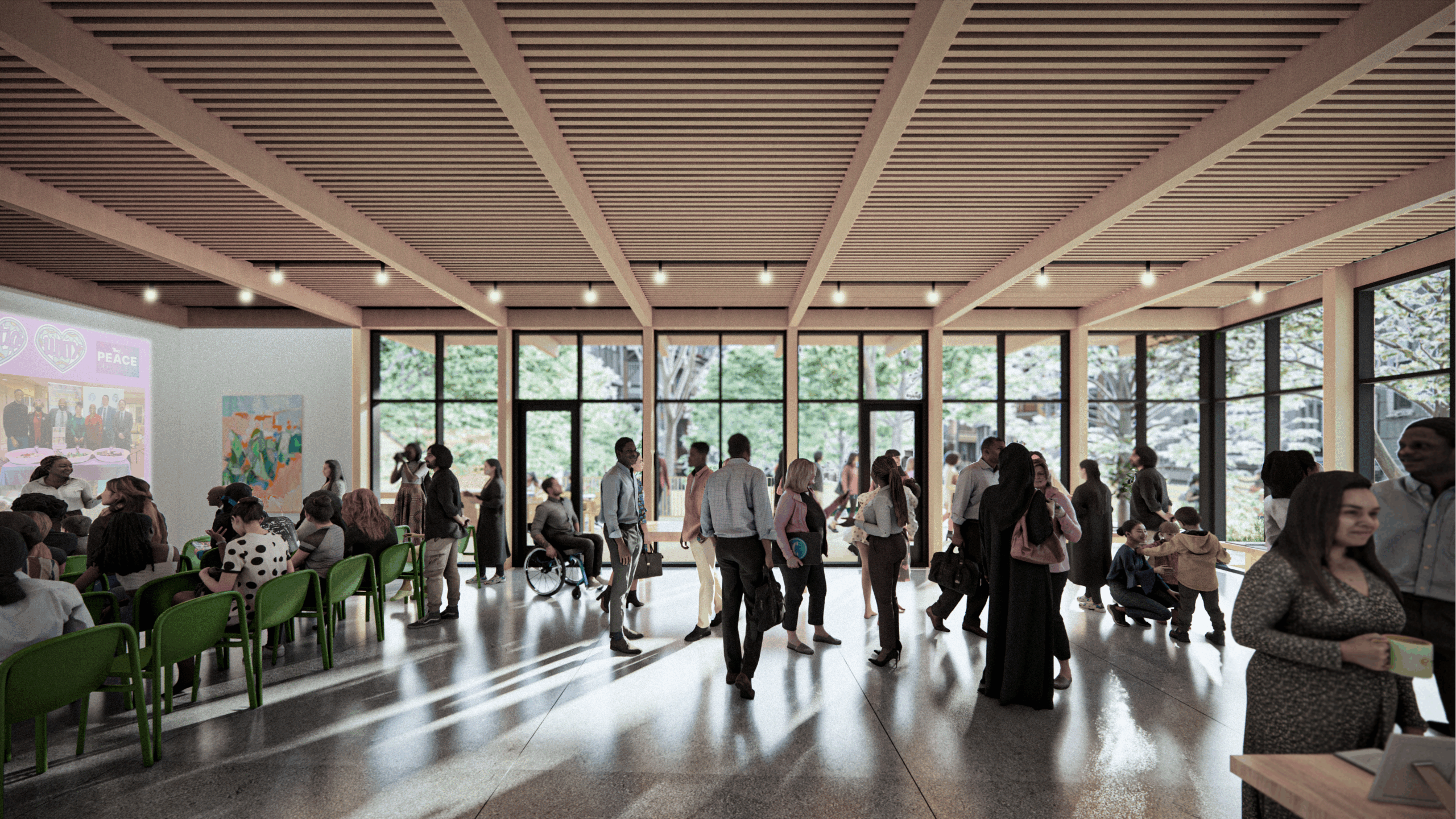
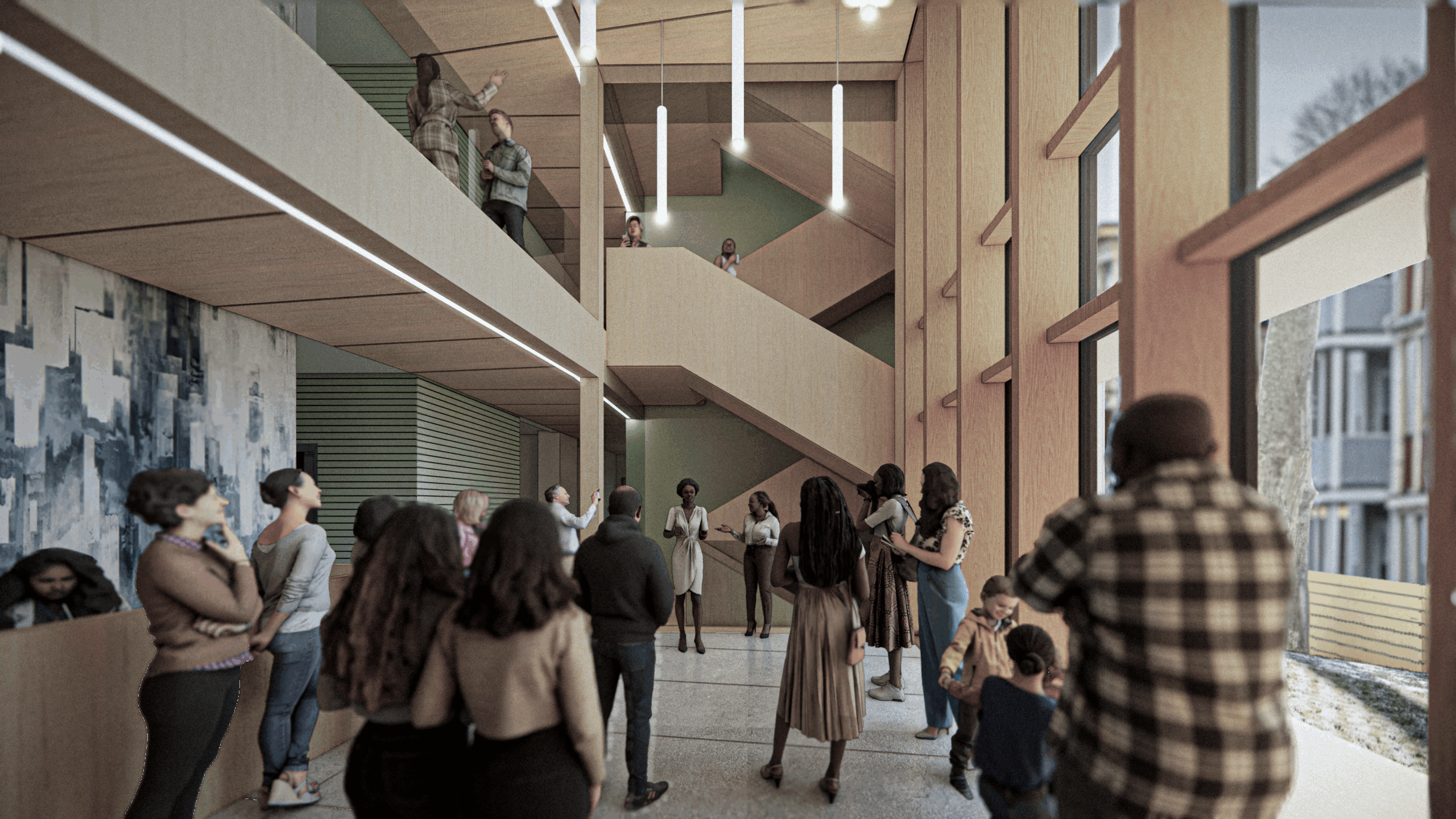
The Louis D. Brown Peace Institute (LDBPI) was founded by Clementina Chéry in 1993 after the tragic death by gun violence of her 13 year old son, Louis, and for over thirty years has carried on Louis’s legacy of peacemaking work in Dorchester, across Boston, and around the nation. The new Center for Healing, Teaching, and Learning will house LDBPI and provide services in a beautiful center-block landscape, serving as an oasis at the heart of the neighborhood most impacted by gun violence in Boston. Throughout the building, warm wood materials announce community and gathering spaces, opportunities for biophilia and connections to nature are maximized, and all are cared for with accessible all-gender restrooms, trauma-informed materials and spaces, and supportive intergenerational interactions.
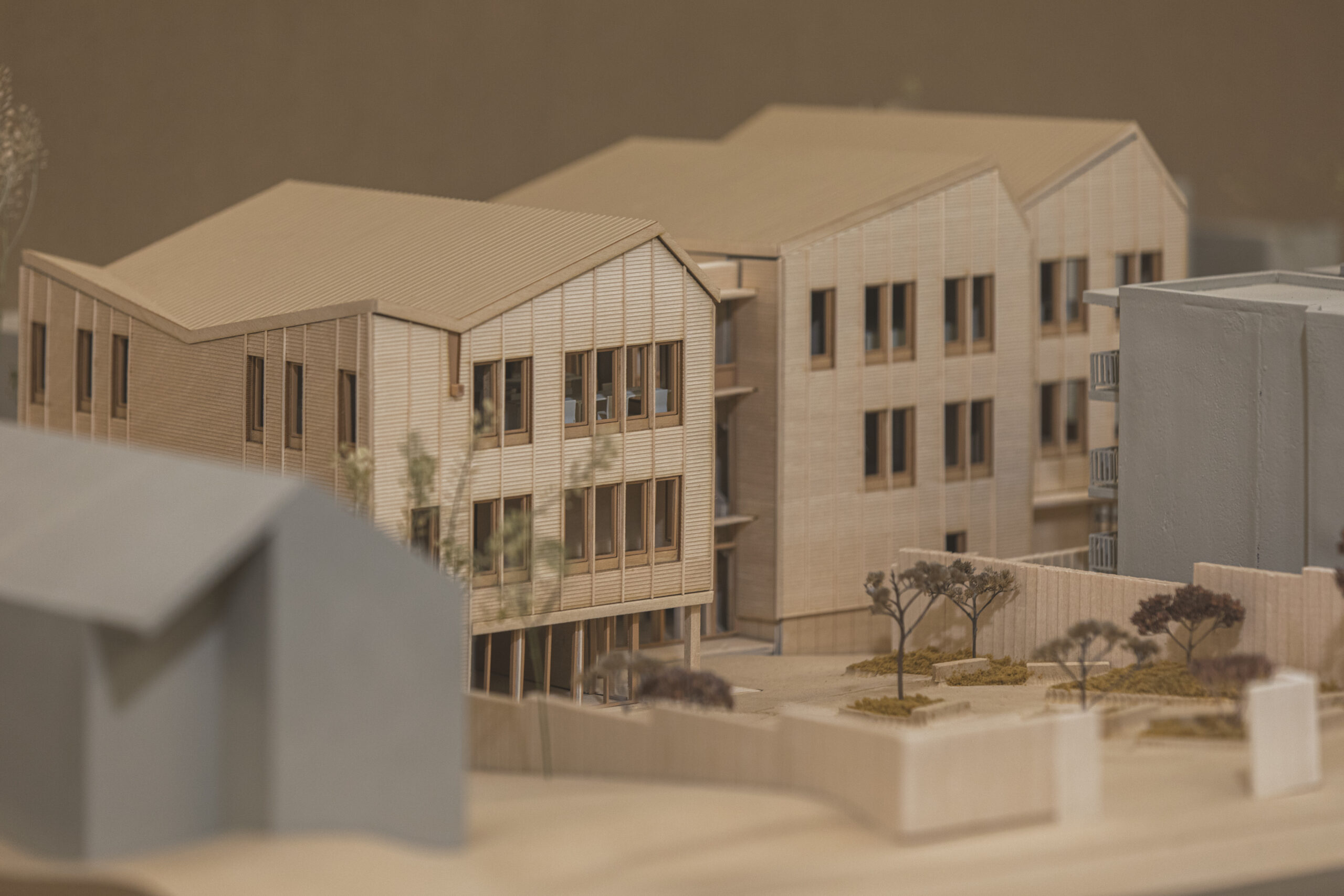
Located on two formerly vacant, city-owned parcels in the heart of the Four Corners and Bowdoin-Geneva neighborhoods, the new facility is conceived as a peaceful oasis within a dense residential setting. The design preserves the mature tree canopy at the center of the block to form a restorative landscape core, while a carefully planned multi-use forecourt and shared parking area provide new opportunities for community gathering. The building’s massing and placement reflect a deep commitment to being a respectful and restorative neighbor — one that strengthens the social fabric and contributes to everyday life in the neighborhood.
Approached by way of a Memorial Community Path designed as a gradual and grounding transition from the street, the first floor opens to the community with a library, chapel, learning space, kitchen, café, multipurpose room, and welcoming porch. These spaces extend directly into outdoor areas with permeable paving, planted gardens, and flexible zones for meetings, meals, ceremonies, and events—offering environments that can evolve throughout the day and throughout the year.
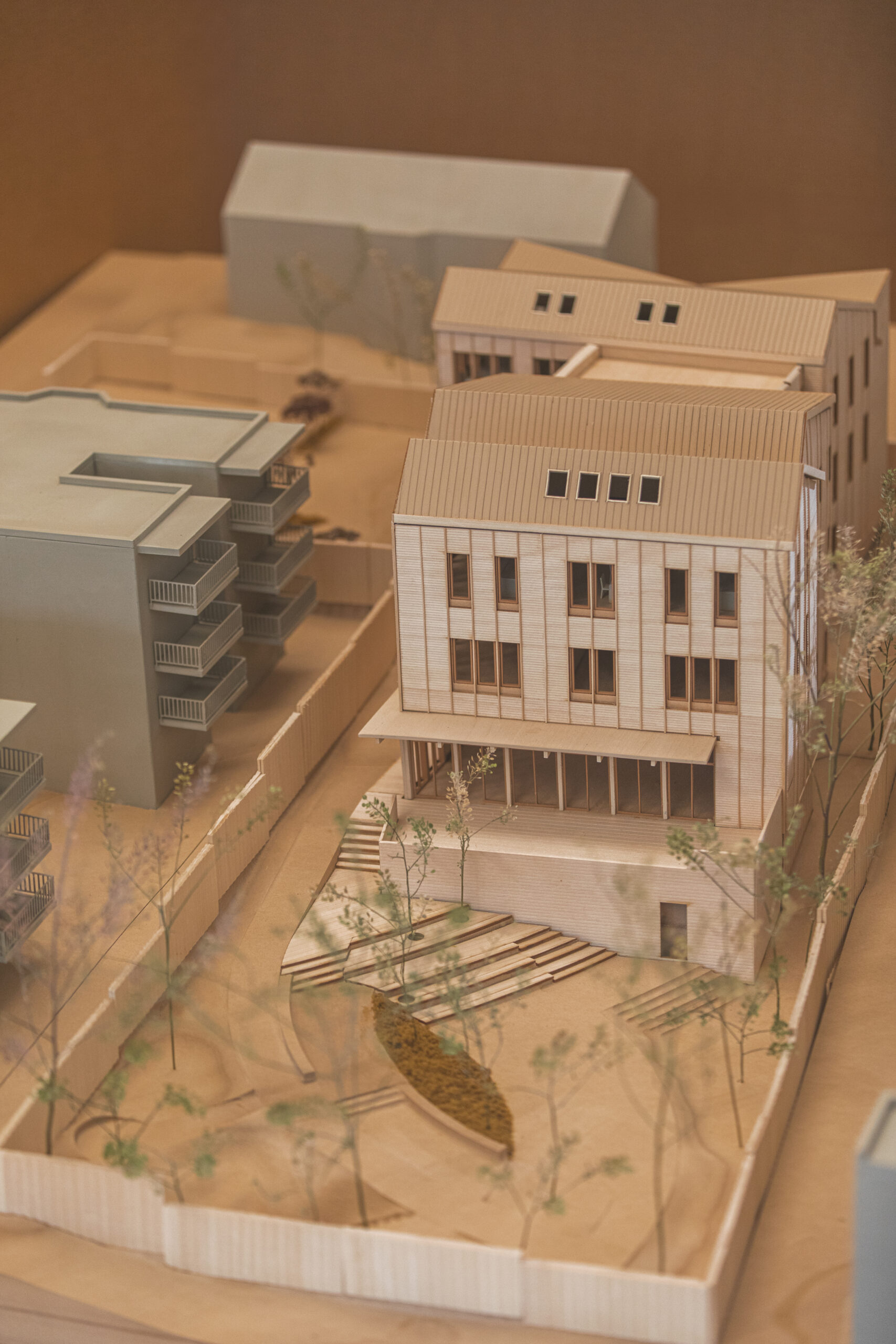
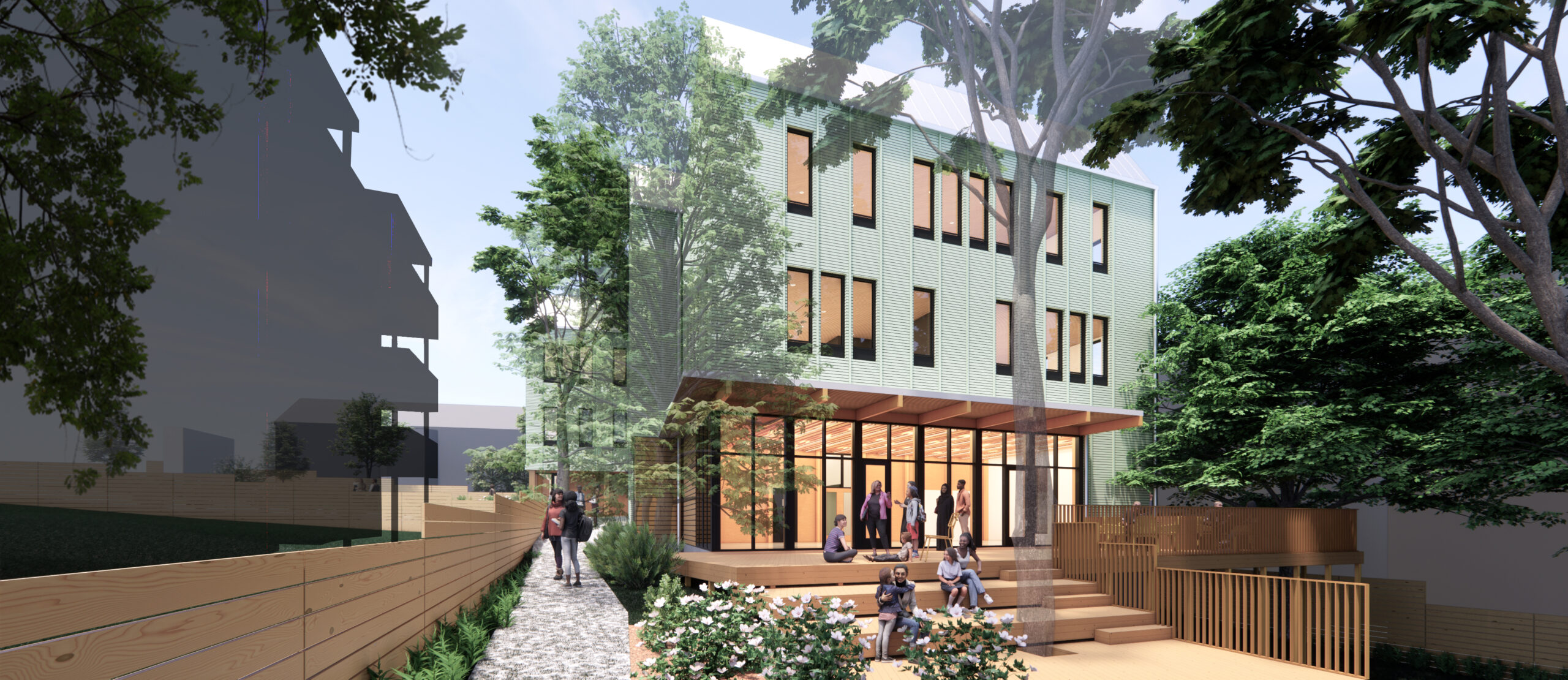

The building’s architectural language draws from the surrounding homes: gabled roofs, familiar materials, and residentially scaled windows create a sense of belonging and ease. Set into the natural grade, the three-story structure is both present and quietly integrated into its context—asserting the importance of its mission without imposing on its neighbors. The design translates the Peace Institute’s values into form, prioritizing beauty, equity, sustainability, and community stewardship.
The Center embodies a simple but profound belief: that healing is possible, that peace is teachable, and that spaces designed with intention can help transform loss into collective strength.